
Independent AI researchΔ / A SMALL CHANGE CAN GO A LONG WAY

Intelligence,
without excess.

Better AI should be within reach. We study how to adapt, reason, and compute more efficiently, then share what we learn.

Small teams.
Careful experiments. Open research.
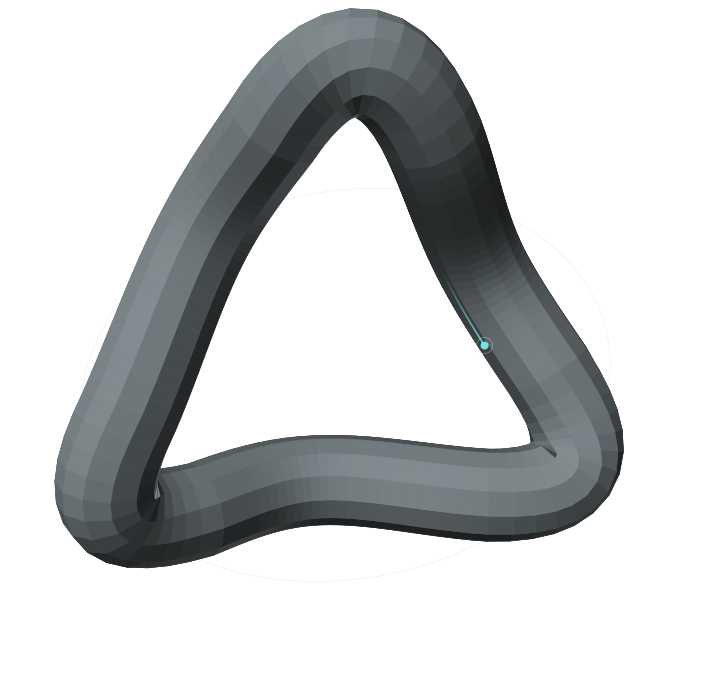
A silver triangular sculpture with a cyan point of light
A small update.
A new possibility.
01 / Research directionsIDEAS WORTH TESTING

Less overhead.
More understanding.

We are building an independent AI research lab at the intersection of fine-tuning, reinforcement learning, model optimization, and practical systems. Three connected questions guide our research.

BASE WEIGHTSSMALL UPDATEW′ = W + ΔW
Research question / 01

How much really
needs to change?

Explore lightweight fine-tuning methods that specialize models while keeping memory use and training costs in view. Study the tradeoffs between adapter size, learning capacity, and reliable evaluation.

Parameter efficiencyLow-rank adaptationFine-tuning
Conceptual illustrations · research directions, not benchmark results

ONE CONNECTED AGENDA

Adapt the model. Improve the reasoning. Respect the hardware.

02 / Open work BUILDING IN THE OPEN

From a question
to something you can inspect.

Our goal is to turn experiments into useful, inspectable artifacts: methods, model weights, and the details needed to evaluate them.

THE RELEASE DESK

First releases
are taking shape.

We’re at the beginning. Published work will appear here as it becomes available.

Visit DeltaTune on Hugging Face
WHAT WE AIM TO SHARESTATUS
01 / METHODS

Training & adaptation recipes

Configurations, baselines, and the choices behind an experiment.

Planned
02 / ARTIFACTS

Models & research code

Useful implementations and checkpoints with clear documentation.

Planned
03 / EVIDENCE

Reports & evaluation notes

Results, limitations, and experiments that didn’t work.

Planned
Follow the lab as it develops
03 / The lab charterHOW WE WANT TO WORK

Curiosity,
with standards.

Independent means we can choose the questions. Rigor means we still have to earn the answers.

The DeltaTune approach
01

Efficiency is part of the question.

Measure the cost of a method alongside its capability. Treat memory, time, and hardware requirements as research outcomes.

02

Make the evidence inspectable.

Document baselines, evaluation choices, and configurations. Aim for artifacts that others can understand, test, and build on.

03

Report the limits, too.

A result is more useful when its boundaries are clear. Share uncertainty, failure cases, and tradeoffs alongside improvements.

04

Keep useful work open.

Prioritize accessible research and thoughtful documentation. Make it easier for a small team with a good question to participate.

04 / The foundersTWO PEOPLE. A SHARED QUESTION.

A small lab.
Room for good ideas.

Founded by Pakistan-based researchers Rao Muhammad Dayan Atif and Syed Muhammad Sarim Ahsan, connected with Sir Syed University, DeltaTune Lab is an independent AI research lab focused on fine-tuning, reinforcement learning, model optimization, and shared learning.

05 / Field notesTHE LAB BLOG

Notes from
the workbench.

Short essays on what we are studying, how we plan to work, and the ideas behind the experiments. Written in plain language, without overstated claims.

Why we started DeltaTune LabAn independent lab with a narrow promise: ask focused questions about efficient AI and publish what we learn, including what does not work. θ′ = θ + Δθ: why small updates matterA plain-language look at parameter-efficient fine-tuning, low-rank adaptation, and the questions we want to test. How we intend to report resultsBaselines, costs, failure cases and configurations: the checklist every DeltaTune release should pass before it goes public.
Read all field notes
06 / Start a conversationGOOD QUESTIONS TRAVEL

What could we
figure out together?

Research ideas, open-source contributions, or a thoughtful question. We’d like to hear from you.

Get in touch